 Digital Marketing BlogSEO for Professional Services in 2026: A Practical Growth Guide
 SEO for Professional Services in 2026: A Practical Growth Guide
Why SEO Now Sits at the Core of Professional Services Growth
In 2026, SEO is no longer about rankings.
It’s about being visible at the exact moment someone decides they need advice — and being credible enough to make the shortlist.
Professional services operate in high-trust, high-value markets. Prospects don’t convert casually. They research, compare, validate and shortlist before ever picking up the phone.
If you are not present during that research phase, you are not competing.
What SEO Actually Delivers in 2026
1. Commercially Intent-Driven Visibility
Search remains the highest-intent acquisition channel available.
When someone searches:
- “Commercial litigation solicitor London”
- “R&D tax credit specialist for tech companies”
- “Executive search firm healthcare sector”
They are not browsing. They are looking to instruct.
The objective isn’t traffic.
It’s visibility for revenue-driving queries.
2. Demonstrable Authority (E-E-A-T in Practice)
Search engines now evaluate experience and credibility far more rigorously.
For professional services, this is an advantage — if leveraged properly.
Authority is built through:
- Real author profiles with qualifications
- Measurable case studies
- Sector-specific insights
- Digital PR and earned media
- Topical depth across service areas
Firms publishing generic commentary will struggle.
Firms publishing insight grounded in experience will compound.
3. Predictable, Compounding Lead Generation
SEO is one of the few channels where returns compound over time.
One law firm client achieved a 4800% increase in organic traffic over two years. Organic search now drives nearly 90% of total website traffic.
The real outcome?
- Consistent qualified enquiries
- Lower cost per acquisition
- Reduced reliance on paid channels
SEO, done properly, becomes infrastructure — not a campaign.
8 Strategic SEO Priorities for Professional Services Firms
This isn’t about tactics in isolation. It’s about alignment between visibility, authority and conversion.
1. Intent-Led Keyword Strategy
Volume is irrelevant without intent.
Instead of:
“tax advisor”
Target:
- “Tax advisor for SaaS companies UK”
- “Employment solicitor redundancy advice Manchester”
Long-tail, sector-specific queries convert because they reflect real commercial need.
Keyword research in 2026 should include:
- AI-assisted query modelling
- Competitor gap analysis
- Sector terminology mapping
- Question-led search analysis
The aim is commercial alignment — not vanity metrics.
2. Dedicated Service, Sector and Location Architecture
Generic “Our Services” pages no longer compete.
You need:
- Individual service pages
- Sector-specific landing pages
- Location pages (where relevant)
Each page must clearly demonstrate:
- Positioning
- Experience
- Proof
- Conversion pathway
This improves relevance, user experience and enquiry rate.
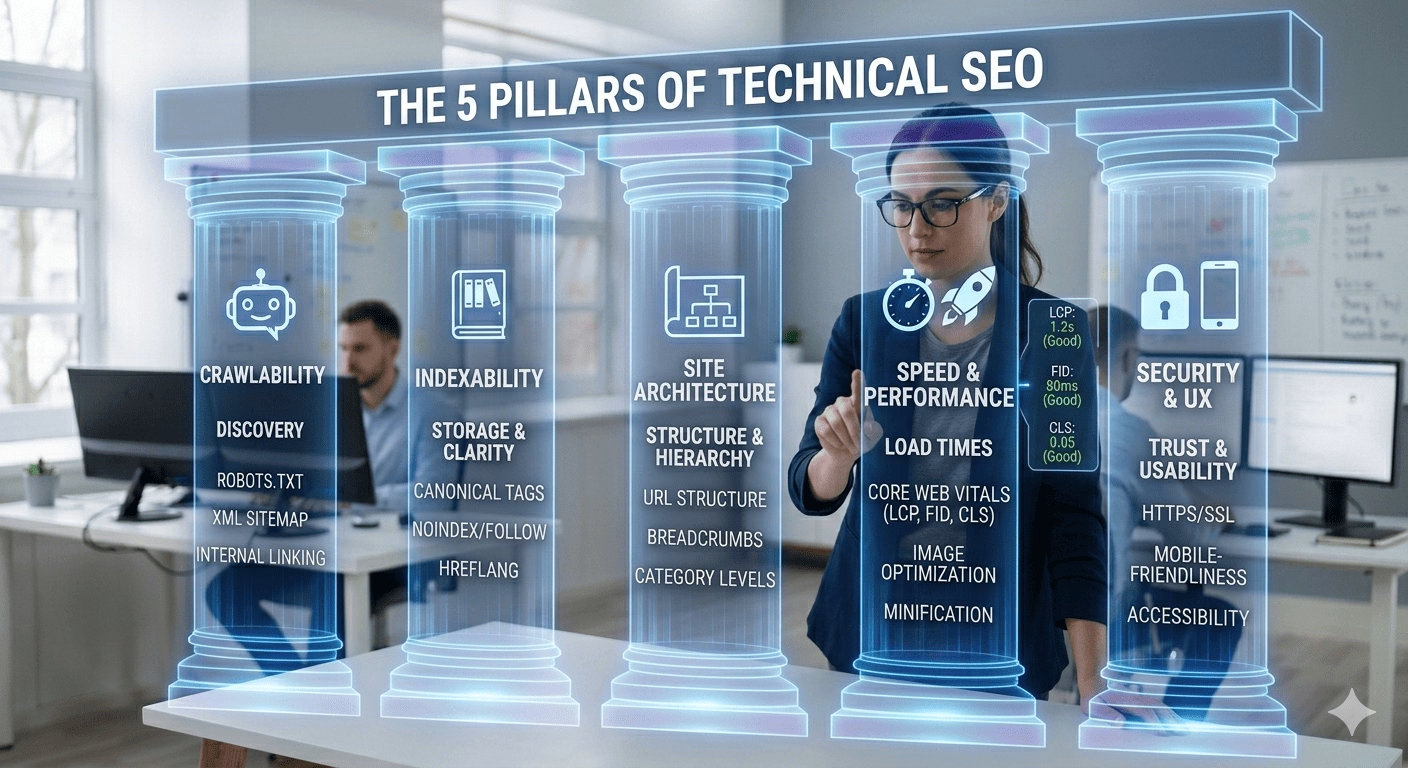
3. Technical Foundations Are Non-Negotiable
Professional services compete in highly competitive SERPs.
You cannot afford technical weaknesses.
Priorities:
- Mobile-first performance
- Clean architecture
- Structured data
- Optimised Core Web Vitals
- Proper indexation management
Technical SEO is credibility infrastructure.
4. Experience-Led Content (Not Generic Commentary)
Search engines increasingly reward first-hand expertise.
High-performing formats include:
- Regulatory breakdowns
- Sector analysis
- Practical implementation guides
- Partner commentary
- Measurable case studies
Length helps — but clarity wins.
Structure matters:
- Subheadings
- Summaries
- Bullet points
- Logical hierarchy
Authority is built through depth and consistency.
5. Digital PR for Real Authority Signals
Backlinks still matter. But quality now outweighs volume decisively.
Focus on:
- Industry publications
- Specialist media
- Association links
- Speaking contributions
- Research-led campaigns
Authority is earned, not manufactured.
6. Local SEO for Multi-Office and Regional Firms
If geography influences client choice, Local SEO is critical.
Optimise:
- Google Business Profile
- Location pages
- Local citations
- Review acquisition
Reputation signals increasingly influence both rankings and conversion behaviour.
7. Social as Distribution, Not Vanity
Social media doesn’t directly rank you.
But it amplifies:
- Insight
- Reach
- Brand credibility
- Link acquisition
LinkedIn remains particularly powerful for professional services.
Distribution fuels authority.
8. Measurement Beyond Traffic
Traffic is not the goal.
Track:
- Enquiry growth
- Conversion rates
- Assisted conversions
- Landing page performance
- Revenue attribution
CRO is where SEO profitability is unlocked.
Small improvements in conversion often outperform ranking gains.
The Role of AI in 2026 Search
AI-generated summaries and agent-driven search are reshaping visibility.
To remain competitive:
- Structure content clearly
- Use schema strategically
- Answer client questions directly
- Demonstrate first-hand experience
- Maintain consistent entity signals
Firms that publish well-structured, authoritative content are more likely to be referenced in AI-driven results.
This is not about gaming AI.
It’s about clarity, structure and credibility.
Should You Work with a Specialist SEO Agency?
Professional services SEO is nuanced.
It requires:
- Regulatory sensitivity
- Reputation management
- Sector understanding
- Technical depth
- Conversion strategy
The wrong approach can dilute positioning.
The right approach builds durable authority.
Final Thoughts
In 2026, SEO for professional services is not a marketing add-on.
It is a business development channel.
Firms that treat SEO as infrastructure — not a campaign — will benefit from:
- Stronger positioning
- Higher-quality enquiries
- Long-term digital resilience
In trust-led markets, visibility and authority are inseparable.
SEO is where both are built.
Contact us today to explore how our expertise can empower your professional services firm.
Further Reading
Explore more insights from our team:
- Technical SEO Optimisation: An Up-to-Date Guide
- Keyword Research: A Simple, Effective Process for 2026
- SEO Copywriting to Double Website Traffic
- Master AI SEO: Rank Higher in Perplexity, ChatGPT, and Gemini
- An Introduction to Generative Engine Optimisation (GEO)
- The Best SEO Tools for Small Businesses
- Local SEO Solutions: 8 Key Strategies for Local Visibility
- How to Build Trust Online: 5 Key Strategies
Frequently Asked Questions
What makes SEO different for professional services firms?
Professional services SEO must prioritise E-E-A-T (Experience, Expertise, Authoritativeness, Trustworthiness) because Google applies higher scrutiny to YMYL (Your Money or Your Life) content in law, finance, and health. Content must demonstrate genuine expertise, local SEO is critical for client acquisition, and trust signals carry more weight than in other industries.
How long does SEO take to work for professional services?
Expect measurable ranking improvements within three to six months and meaningful lead generation within six to twelve months. Competitive practice areas (personal injury law, financial advisory) may take longer. The investment compounds — firms that sustain SEO efforts for twelve months or more see the strongest returns.
Is content marketing essential for professional services SEO?
Yes. Content marketing is the primary vehicle for demonstrating expertise, building topical authority, and targeting the long-tail queries that professional services clients use during research. Blog posts, case studies, guides, and thought leadership pieces work together to establish your firm as the authoritative source in your specialisation.

Related
Articles
![What Is Entity-Driven SEO? A Practical Guide for Professional Services [2026]](https://www.agiledigitalagency.com/wp-content/uploads/2026/03/What-Is-Entity-Driven-SEO-1.avif)