Digital Marketing BlogCore Web Vitals: Learn How to Improve for Better SEO [2026]
 Core Web Vitals: Learn How to Improve for Better SEO [2026]
It is a well-known fact that users prefer websites with exceptional page experiences. Google has a long-standing reputation for prioritising the best possible user experience (UX). In recent years, the company has shifted from simply treating performance as a “bonus” to making it a core pillar of its ranking systems.
With the rollout of the December 2025 Core Update, the bar for technical excellence has been raised once again. In this article, we’ll break down what you need to know about Core Web Vitals today and how to ensure your site remains competitive.
What Are Core Web Vitals?
Core Web Vitals is a set of real-world, user-centred metrics that quantify key aspects of the user experience. According to Google:
“Core Web Vitals is a set of real-world, user-centred metrics that quantify key aspects of the user experience. They measure dimensions of web usability such as load time, interactivity, and the stability of content as it loads (so you don’t accidentally tap that button when it shifts under your finger – how annoying!).”
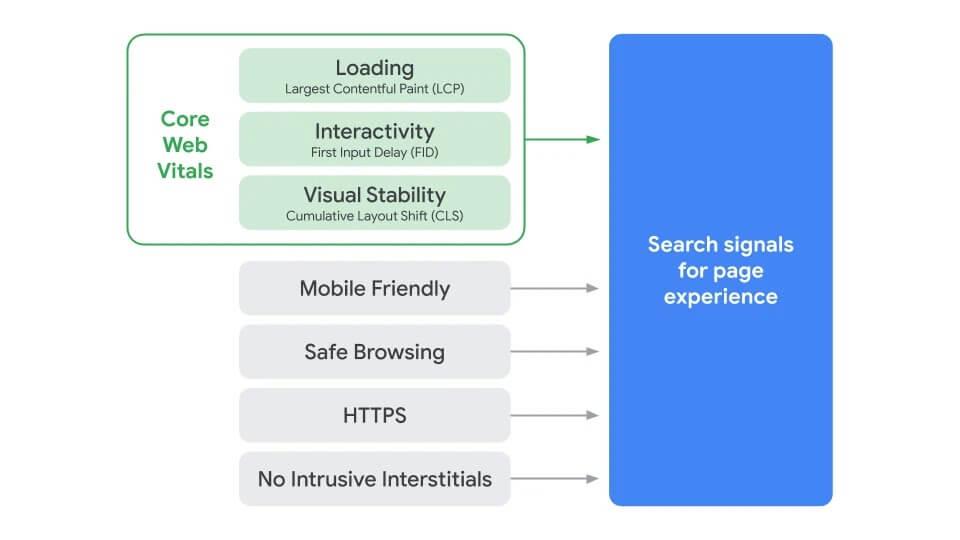
In 2026, these metrics are no longer just technical suggestions—they are integral to how Google’s systems reward “helpful, reliable, and people-first content.”
When Did Core Web Vitals Roll Out?
Google began using page experience signals in 2021. However, the most significant shift occurred in March 2024, when Interaction to Next Paint (INP) officially replaced First Input Delay (FID) as the primary interactivity metric. Today, Google evaluates your site primarily on its mobile performance, even if your desktop experience is flawless.
Are Core Web Vitals Important For Seo?
As a seasoned SEO agency, we’ve seen that Core Web Vitals act as a “tie-breaker.” If two pages have equally high-quality content and authority, the faster, more stable page will win.
However, since the late 2024 and 2025 updates, Google has moved toward a holistic page experience signal. This means Core Web Vitals are now tied more closely to E-E-A-T (Experience, Expertise, Authoritativeness, and Trustworthiness). A slow or unstable site signals a lack of professional quality, which can indirectly suppress your rankings across the board.
Google Core Web Vitals
The trio of metrics you must master are:
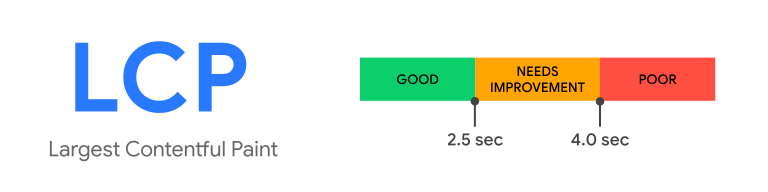
1. Largest Contentful Paint (LCP) – Loading Performance
LCP measures how long it takes for the largest piece of content (usually a hero image or heading) to appear on the screen.
For an optimal user experience, LCP should occur within 2.5 seconds of the page beginning to load.
2. Cumulative Layout Shift (CLS) – Visual Stability
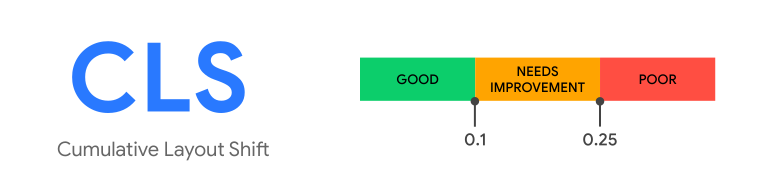
CLS measures how much the page “jumps” as it loads. We’ve all been there: you’re about to click a link, and the page shifts, causing you to click an ad instead.
For an optimal user experience, pages should maintain a CLS of less than 0.1.
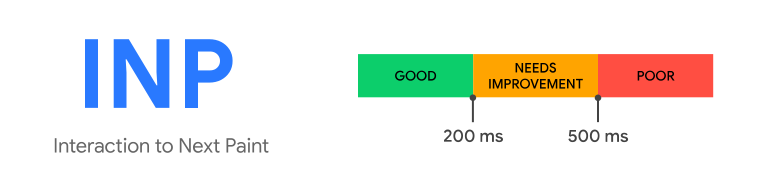
3. Interaction to Next Paint (INP) – Responsiveness
INP is the “new kid on the block” and the most challenging to optimize. It measures the delay of every interaction a user makes (clicks, taps, keyboard inputs), not just the first one.
For an optimal user experience, pages should have an INP of less than 200 milliseconds.
How To Measure Core Web Vitals For My Website
Google provides several popular tools for web developers that support the measurement of Core Web Vitals, enabling you to conveniently identify and resolve user experience issues. These include Lighthouse, PageSpeed Insights, Chrome DevTools, Search Console, web.dev’s measure tool, the Web Vitals Chrome extension and a Chrome UX Report API.
Using the Google Measure tool, you can track and retain records of your page’s performance history.
Learn more about Google’s tools to analyse and improve the performance of your website.
Advanced Optimization Strategies for 2026
Optimise Largest Contentful Paint (LCP)
To optimise your LCP, you can consider the following key factors:
- Server: Choose a hosting provider that offers a fast response time, such as Temok. They offer a free migration, fast hosting infrastructure, and effective caching mechanisms, as well as a Content Delivery Network (CDN) via Cloudflare. This can help ensure that your website loads quickly for visitors. Temok also provides a free SSL certificate and a free Web Application Firewall (WAF) to keep your website secure.
- Caching: Implementing a caching mechanism on your website can help to serve content from its cached version, reducing the number of requests to the database server. Consider using the Autoptimize plugin for WordPress, which helps to compress and optimise assets.
- Front-end Code: Minimise and defer non-critical CSS and JS files. If you are using a commercial theme, it should already implement these best practices. If you are creating a custom theme, ensure you follow WordPress’ recommended practices.
- Prefetch and preconnect: If your website is connecting to 3rd party domains, you can improve your web performance metrics if you place dns-prefetch and preconnect directives in the head element of your website.
- Content: Make sure the content above the fold is minimal and optimised for your key pages. Try to put your large elements, such as embeds, videos, and image galleries below the fold on your key pages.
- Images: Optimise images to the correct format, size and resolution, and use an image optimisation tool if necessary. Consider using an image CDN, such as CloudImage, which can help improve the performance of your website by delivering images faster, and using modern image formats.
> See also: 10 reasons to use Cloudflare on your website
Optimise Cumulative Layout Shift (CLS)
To reduce CLS, consider the following key elements:
- Adding width and height attributes to images and video elements.
- Addressing dynamic placeholder settings for third-party ads, by predefining the ad slot area or placing them further down the page to limit content shifting.
- Reviewing embeddable widgets and iframes that may cause content shifting during loading, and defining the height to minimize the shift.
- Using the preload attribute for custom web fonts (Google fonts or others) to improve performance and reduce CLS.
Optimise Interaction to Next Paint (INP)
To reduce the Interaction to Next Paint (INP), consider the following steps:
- Split large JavaScript files into smaller parts, and only load the necessary ones for the specific page.
- Minimise the size and compress the JavaScript files.
- Delay the loading of non-priority JavaScript files until after the main content has loaded.
- Check the third-party scripts that you are using and make sure they are being served from a Content Delivery Network (CDN) and are minimised.
- Consider the third-party widgets that you are using, such as social media widgets, and aim to use as few as possible to reduce the impact on the FID.
Are You Having Difficulties With Google’s Core Web Vitals?
We’re here to help you!
If you’ve been struggling to enhance your website’s Core Web Vitals, you don’t have to worry anymore. Our team of search engine optimisation consultants is ready to assist you. Please feel free to contact us for support.
If you want to learn more about AI SEO, make sure you read our Ultimate Guide to AI-First SEO for Professional Services.

Our commitment to excellence is underscored by our recognition as a Top Technical SEO Company in London for 2026.
Frequently Asked Questions
What are Core Web Vitals and why do they matter for SEO?
Core Web Vitals are a set of three specific metrics that Google uses to measure real-world user experience on your website: Largest Contentful Paint (loading speed), Interaction to Next Paint (responsiveness), and Cumulative Layout Shift (visual stability). They are a confirmed Google ranking factor and directly affect both search rankings and user engagement.
What is a good LCP score?
Google considers an LCP of 2.5 seconds or less as ‘good’. Between 2.5 and 4 seconds needs improvement, and over 4 seconds is poor. To improve LCP, optimise your largest above-the-fold element (usually a hero image or heading), implement lazy loading for below-the-fold content, and ensure your server response time is fast.
How do Core Web Vitals affect AI search visibility?
Whilst AI search engines don’t directly rank by Core Web Vitals, sites with better performance metrics tend to have higher traditional rankings, which correlates with being cited more frequently in AI-generated responses. Additionally, Google’s AI Overviews inherit ranking signals from organic search, making Core Web Vitals indirectly relevant to AI visibility.
What replaced First Input Delay (FID) in Core Web Vitals?
Google replaced First Input Delay (FID) with Interaction to Next Paint (INP) in March 2024. INP is a more responsiveness metric that measures the latency of all user interactions throughout the page lifecycle, not just the first one. A good INP score is 200 milliseconds or less.
How can I measure my site’s Core Web Vitals?
Use Google PageSpeed Insights for individual page analysis, the Core Web Vitals report in Google Search Console for site-wide data, Chrome DevTools for real-time debugging, or the Web Vitals Chrome extension for quick checks. For the most accurate results, review field data (real user metrics) rather than just lab data.

Senior-led UK digital agency. AI-first SEO, web design and dev for law firms, SaaS and professional services. Clutch SEO Award winner.
Related
Articles