Digital Marketing BlogSmall Firm SEO: Outrank Larger Companies with Niche Authority & Agility
 Small Firm SEO: Outrank Larger Companies with Niche Authority & Agility
In today’s digital-first economy, many small and mid-sized professional service firms feel overshadowed by larger competitors with bigger budgets, teams, and visibility. Yet with a targeted SEO strategy, local firms can compete effectively, attract the right clients, and build long-term authority – often faster than their larger counterparts.
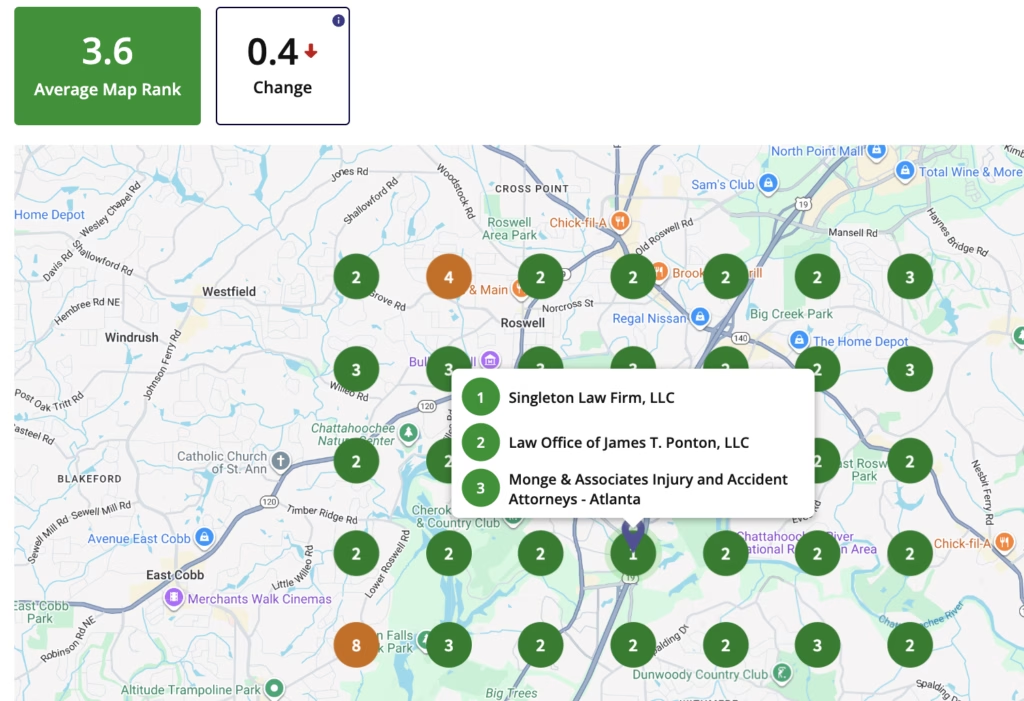
This guide explains how local businesses, whether law firms, finance companies, SaaS providers, or boutique hospitality brands, can use SEO strategically to level the playing field.
Understanding Your Competitive Advantage
Smaller firms often underestimate the advantages they naturally have:
- Agility: Faster to adapt messaging, offers, and web experiences than larger competitors.
- Closer to clients: You understand your audience’s pain points firsthand.
- Niche authority: Ability to create highly targeted, experience-based content.
- Authenticity: Less “corporate” tone resonates with clients and search engines.
Google increasingly rewards content that demonstrates experience, expertise, and trust (E-E-A-T), a perfect fit for smaller firms with hands-on expertise.
Key takeaway: Your size can be an advantage, use it with strategic, authoritative content.
Focus on Long-Tail Keywords
Targeting long-tail keywords allows smaller firms to compete for high-intent searches without the competition faced by larger organisations.
Examples include:
- “Corporate tax advisory for London startups”
- “Tips for Settling Atlanta Car Accident Claims”
- “SaaS growth strategy for B2B software startups”
Why this works:
- Lower competition
- Higher intent and more qualified leads
- Better conversion rates
By aligning content to these specific search queries, you attract the audience most likely to become clients.
Build High-Quality, Helpful Content
Content is your secret weapon. Smaller firms can produce niche-specific articles, case studies, and insights that larger competitors struggle to replicate.
Effective content formats for professional services:
- How-to guides built for your niche (e.g., GDPR compliance for SMEs)
- Case studies demonstrating real client outcomes
- Localised insights for city- or region-specific queries
- Thought leadership articles or expert opinions from your leadership team
Tip: Structure content for AI and GEO search, clear headings, bullet points, schema markup, and structured Q&A improve discoverability in generative search results.
Optimise for Local SEO
Local search can be a game-changer for small professional services firms:
- Keep your Google Business Profile fully completed and regularly updated
- Encourage client reviews (trusted sources signal authority)
- Use location‑based keywords (for example, “IP law firm in Manchester”) in key pages and metadata
- Add local business schema markup to help search engines understand your firm and locations
- Publish localised case studies and service pages targeting your key cities or regions
Larger firms often overlook local optimisation, which gives you a genuine opportunity to gain a competitive edge.
Strengthen Your Website’s Technical Foundation
Technical SEO ensures your website is fast, secure, and accessible:
- Optimise page load speed and mobile responsiveness
- Implement HTTPS and robust security measures
- Maintain a clean site architecture and internal linking
- Use clear meta tags, header structures, and alt text
- Ensure all key pages are crawlable and indexable (robots.txt, XML sitemaps, noindex where needed)
- Fix broken links, redirect chains, and 404 errors to avoid wasted crawl budget
- Use canonical tags and logical URL structures to prevent duplicate content issues
- Implement structured data (schema) to enhance visibility in search results
- Set up ongoing technical monitoring and audits (Core Web Vitals, server errors, crawl stats).
A strong technical foundation signals reliability to both search engines and potential clients.
Use Backlinks Strategically
Even a few high-quality backlinks can help a smaller firm punch above its weight.
Effective strategies include:
- Partnering with local organisations or chambers of commerce
- Contributing expert quotes to press articles or industry blogs
- Publishing original research, reports, or benchmarking studies
- Guest articles on relevant, reputable blogs and publications
- Listing in reputable business directories
Key: Focus on quality over quantity. One authoritative backlink can outperform dozens of weak links from generic sources.
Showcase Expertise and Authenticity
Clients want to buy from people, not faceless organisations.
Ways to demonstrate expertise and authenticity:
- Share interviews with team members or leadership to highlight real experience and personality
- Offer behind‑the‑scenes insights into how you work, your processes, and your values
- Publish detailed case studies or client success stories that show how you solve real problems
- Provide clear, actionable advice instead of vague marketing claims
Google rewards strong E-E-A-T signals (experience, expertise, authoritativeness, and trustworthiness), which often puts smaller, specialist firms in a naturally well‑positioned place to stand out against larger, more generic competitors.
Anchor Your Strategy to Your Website
Your website is the hub of your digital strategy, not just a brochure:
- It centralises data and insights from social media, email, paid campaigns, and offline marketing
- It enables agile experimentation through A/B testing of landing pages, messaging tweaks, and real-time content pivots
- You retain full control over branding, compliance, messaging, and conversion pathways
Social media amplifies content, but platforms can change rules or features overnight (remember LinkedIn company reviews being removed?).
Bottom line: A strong website ensures you own your digital presence, while social and other channels act as spokes that feed into it.
Where This Meets SEO, GEO, and AI Search
Structured data is key to optimising for GEO and AI-driven search engines.
- Ensure your entity information (name, address, services, expertise) stays consistent across your website, social profiles, PR mentions, and directories.
- Publish authoritative, timely content that AI models can cite, like original research, detailed case studies, or unique expert insights.
- Combine proven SEO fundamentals with GEO best practices and AI-ready content structuring to capture visibility in both traditional and generative search results.
This integrated approach positions smaller firms to thrive as search evolves beyond keywords into entity-based, conversational experiences.
Frequently Asked Questions
Can small firms really outrank larger competitors in SEO?
Yes. Small firms can dominate niche topics and local markets that larger competitors overlook. By focusing on specific practice areas, geographic areas, or industry verticals, small firms can build deeper topical authority and stronger local signals than generalist competitors. AI search engines in particular reward niche authority over brand size.
What is niche authority and how do I build it?
Niche authority means being the recognised expert in a specific topic area. Build it by creating content clusters around your specialisation, earning backlinks and citations from industry-specific sources, generating reviews from clients in your niche, and consistently demonstrating expertise through case studies, thought leadership, and detailed practical guidance.
How much should a small firm invest in SEO?
Start with a minimum of £1,000-2,000 per month for meaningful progress. Focus investment on the highest-impact activities: Google Business Profile optimisation, one or two content pieces per month demonstrating niche expertise, basic technical SEO, and review generation. As organic traffic and leads grow, reinvest returns into expanding your SEO programme.
What quick SEO wins can small firms achieve?
Fully optimise your Google Business Profile (often done in a single afternoon), fix technical issues flagged in Google Search Console, add schema markup to your homepage and key service pages, request reviews from recent satisfied clients, and update your most important pages with full, expert content. These actions can show results within weeks.

Related
Articles