Digital Marketing BlogBeyond SEO: A Practical Introduction to Generative Engine Optimisation (GEO)
 Beyond SEO: A Practical Introduction to Generative Engine Optimisation (GEO)
Imagine asking an how AI has reshaped SEO assistant, “What’s the best way to grow my law firm in 2026?” and instantly receiving a crisp summary-no blue links, no scrolling. But whose advice is the AI quoting? If it’s not yours, your expertise is invisible.
Welcome to the era of Generative Engine Optimisation (GEO), where being the answer is everything. As AI-powered search transforms how people find information, GEO is the new battleground for visibility, trust, and growth.
If you haven’t yet read our Ultimate Guide to AI-First SEO for Professional Services, start there.
What is Generative Engine Optimisation (GEO)?
GEO is the process of optimising your content so that AI-powered search engines, like Google’s Search Generative Experience (SGE), Microsoft Copilot, Perplexity.ai, ChatGPT (with browsing), and Gemini, select your expertise as the source they quote, cite, and summarise in their responses.
Unlike traditional SEO, which fights for a spot on page one, GEO is about owning the answer box in AI-powered search.
Why GEO Matters in 2026
Let’s get real:
- Over 60% of informational searches now trigger AI-generated overviews, according to the Stanford AI Index Report.
- Click-through rates for traditional organic listings can drop by 35–60% when AI summaries are shown.
- If you’re not cited by AI, you’re invisible, even if you’re #1 in classic SEO.
AI is the new gatekeeper. If it doesn’t see your authority, your audience never sees you.
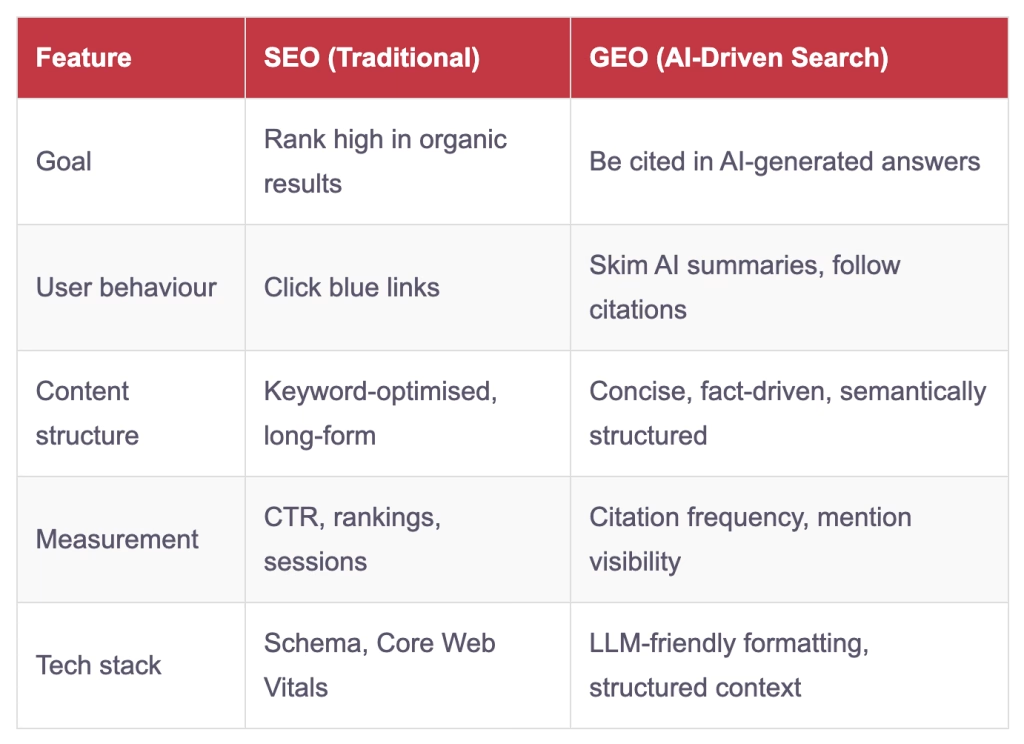
SEO vs GEO: What’s Changed?
How to Optimise for GEO: The Fundamentals
Let’s break it down, step by step:
1. Write Like a Human, For AI
- Use natural, conversational language.
- Short, clear sentences. No jargon. No waffle.
- If your content sounds like you’re explaining it to a friend in a coffee shop, you’re on the right track.
2. Lead With Answers, Expand With Insight
- Start with a direct, standalone answer to the main question, then expand.
- Use the inverted pyramid: most important info first, details follow.
- Example:
- Q: What’s the best digital marketing strategy for law firms in 2026?
- A: Combine LinkedIn thought leadership, targeted retargeting, and local SEO. Here’s why…
3. Use Explicit Q&A Format
- Anticipate real user questions and write them out.
- Answer them directly and succinctly.
- This mirrors how people search and how AI engines pull responses.
4. Be Snippet-Ready
- Structure answers in bullet points, numbered lists, or tables.
- Use headings and subheadings to break up content.
- Make it easy for AI to extract and showcase your insights.
5. Put Structured Data to Work
- Implement FAQ, HowTo, Article, and Product schema.
- Use tools like Schema.org, RankMath, or Yoast.
- Structured data helps AI identify and extract relevant content.
For indexing and crawlability essentials, read our Website Indexing Guide.
6. Emphasise Authority and Accuracy
- Demonstrate expertise with author bios, credentials, and external citations.
- Back up claims with up-to-date statistics, original data, and case studies.
- Link to reputable sources and include references where possible.
Read how we help clients Stay Ahead of AI Search Trends
7. Publish an llms.txt File for AI Crawlers
llms.txt is a simple Markdown file you put at the root of your site (like robots.txt, but for AI models) that tells large-language-model crawlers what your site is about and points them to the canonical pages they should cite. The companion llms-full.txt can include the full Markdown content of the pages you most want surfaced. It’s increasingly treated as table stakes for “AI-ready” sites – and is one of the simplest signals to publish.
- What to include: a short site summary, your key services or topics, links to your most-citable pages (each with a one-line description), and your business contact / entity info.
- Where to put it: at the root, e.g.
https://yourdomain.com/llms.txtandhttps://yourdomain.com/llms-full.txt. - Keep it in sync: regenerate it whenever you publish a major page so the version AI engines see matches your live content.
You can see ours at agiledigitalagency.com/llms.txt and /llms-full.txt as a working example.
GEO for Local Businesses: Win Your Backyard
AI search is getting hyper-local. Here’s how to stand out in your area:
✅ Participate in Local Events: Mention and document involvement, AI values local relevance.
✅ Consistent NAP: Keep your Name, Address, and Phone number identical everywhere online.
✅ Geo-tag Images and Videos: Help AI understand your location.
✅ Local Keywords: Use phrases like “best accountant in London.”
✅ Encourage Reviews: More (and better) local reviews boost trust.
✅ Update Business Hours: Keep your details fresh, AI hates stale info.
✅ Local Backlinks: Get cited by local news, directories, and community sites.
Read more on our Local SEO Services
GEO Tools & Resources (Basic Essentials)
- Perplexity.ai: Analyse citations and source preferences.
- AlsoAsked, AnswerThePublic: Find real user questions.
- Schema.org, RankMath, Yoast: Implement structured data.
- Google AI Overviews, Microsoft Copilot: Monitor your niche AI results.
Conclusion: The Future of Search Is Generative
GEO isn’t just a trend, it’s the new battleground for attention. Write like a human, structure for machines, and claim your spot as the source AI trusts.
Ready for the next level? In Part 2, we dive into advanced GEO tactics and real examples.
📊 How do you know any of this is working? We have written a separate guide on how to measure GEO and AI-SEO success – covering per-engine presence tracking, GA4 referral isolation for AI sources, server-log signals from AI crawlers, share-of-voice calculation, and the monthly cadence we run for clients.
Frequently Asked Questions
What is Generative Engine Optimisation (GEO)?
GEO is the practice of optimising your digital presence to be cited, summarised, and recommended by AI-powered search engines such as Google AI Overviews, ChatGPT, Perplexity, and Gemini. It extends traditional SEO by focusing on entity clarity, structured data, topical authority, and content that AI systems can easily extract and attribute.
How is GEO different from traditional SEO?
Traditional SEO optimises for blue-link rankings on search results pages. GEO optimises for citation and inclusion in AI-generated responses. While they share foundations (quality content, technical excellence, authority), GEO places additional emphasis on entity markup, structured data, brand citations, factual accuracy, and content formats that AI systems can parse and reference.
Do I need GEO if I’m already doing SEO?
Yes, but GEO builds upon your existing SEO work rather than replacing it. If you have strong traditional SEO fundamentals, adding GEO elements, enhanced structured data, entity optimisation, and citation-worthy content, is an incremental investment that future-proofs your visibility as AI search continues to grow.
How do I get started with GEO?
Start with an audit of your entity presence, can AI systems clearly identify who you are, what you do, and why you’re authoritative? Implement thorough schema markup, ensure consistent brand information across the web, create content that directly answers common questions in your field, and build citations on authoritative platforms. GEO is a strategic layer on top of solid SEO foundations.

Related
Articles